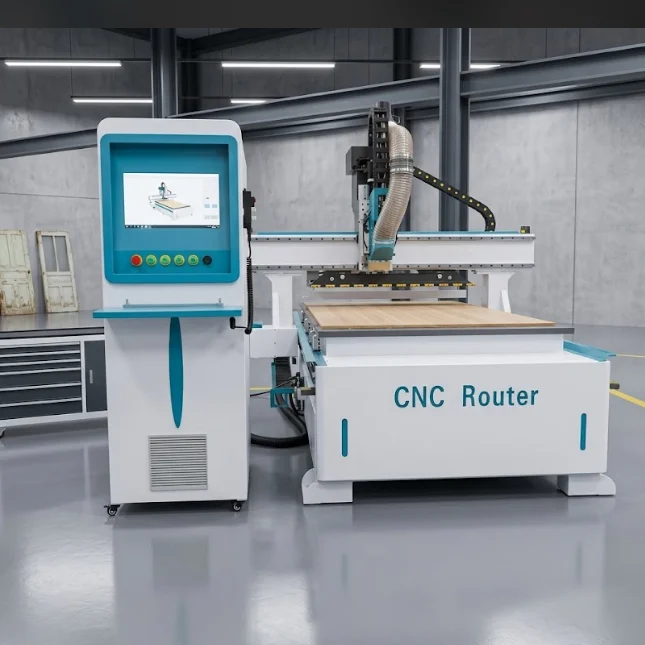
A CNC router quotation is only as accurate as the process information behind it. The same table size can support very different work: cabinet nesting, door machining, decorative routing, drilling or mixed custom production. Providing representative files and a clear workflow helps the supplier propose a configuration that can be evaluated.
Begin with parts and materials
Send drawings for typical parts and the most difficult parts. State sheet dimensions, material type, thickness range, surface condition and batch pattern. Identify small parts, porous materials, narrow strips or parts that may be difficult to hold. If material varies during the year, include that range.
List every required operation
- Through cutting and grooving
- Pocketing, profiling or engraving
- Vertical and horizontal drilling
- Tool changes and required cutter types
- Labeling, marking or part identification
- Automatic loading, unloading or material return
Do not assume that the words “CNC router” or “nesting machine” define the complete process. Operations determine spindle, tool-change, drilling and handling requirements.
Explain the holding requirement
Workpiece holding affects cutting stability and usable material. Describe the table concept, nesting layout, spoilboard practice and smallest part that must remain stable. Vacuum-pump selection should consider material leakage, part geometry, table zones, simultaneous operation and workshop conditions rather than one isolated power figure.
Connect software to production
State which design, nesting or production software creates the jobs. Provide sample output files and explain where tool data, labels and barcodes are generated. Confirm the required file format and data handoff with both software and machine suppliers.
| RFQ section | Evidence to attach |
|---|---|
| Parts | Representative drawings and dimensions |
| Materials | Type, thickness, sheet size and surface information |
| Operations | Toolpaths, hole patterns and required finished result |
| Capacity | Product mix, batch size and shift target |
| Data | Software name, sample files, labels and barcode fields |
| Site | Layout, voltage, frequency, air and dust extraction |
Compare the complete cell
Review the working table, spindle, tool-change arrangement, drilling unit, vacuum system, lubrication, dust collection connection, loading and unloading, controller, software interface, included tooling, documentation and support. Ask each supplier to mark exclusions and optional items.
Define a representative acceptance test
Choose parts that exercise the functions important to the project. Agree on material, program, tools, dimensions, finish checks and the evidence to be supplied. A test based on a real part is more useful than a demonstration created only for speed.
Browse JDRG’s CNC router selection guide and primary models. Send drawings, sample files and the RFQ checklist through the project inquiry form.