
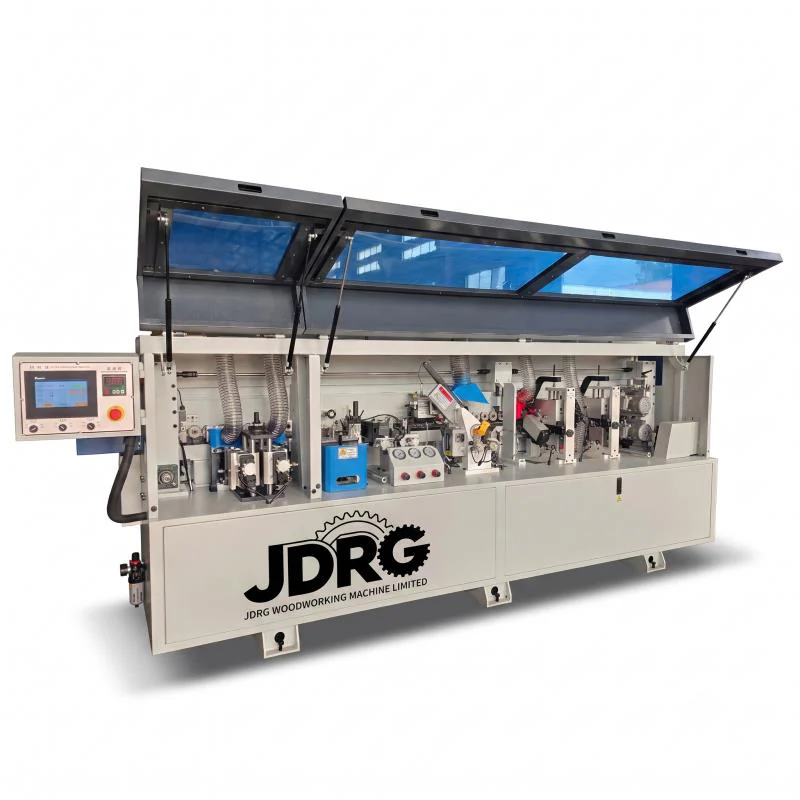
An edge banding machine should be selected around the panels and finished edges it must produce. Comparing only the model name, motor list or maximum feed speed can hide important differences in station sequence, material compatibility, changeover work and installation needs.
Before requesting a quotation, prepare the following information. It gives the supplier a clear process target and makes competing offers easier to compare.
Panel and edge-material range
State the panel types, largest and smallest workpiece dimensions, thickness range and typical batch. Then list the edge materials and thicknesses that will be used. If the factory processes sensitive surfaces, narrow strips, short parts or non-standard shapes, identify them separately so their suitability can be confirmed.
Required station sequence
Write the desired process in order. Depending on the application, the sequence may include pre-milling, glue application, pressure, end trimming, rough and fine trimming, scraping, corner rounding, buffing or cleaning. The correct sequence depends on the finished product; more stations are not automatically better if they are not required by the process.
| Question | What to provide |
|---|---|
| What enters the machine? | Panel material, dimensions, thickness and incoming edge condition |
| What is applied? | Edge material, thickness, color-change frequency and adhesive information |
| What finish is expected? | Representative samples, visible-edge requirements and inspection method |
| How will it be used? | Batch size, product mix, shift plan and upstream/downstream handling |
Glue process and cleaning
Confirm the adhesive type with both the adhesive supplier and machine supplier. Discuss operating temperature, changeover, cleaning, maintenance access and the panel and edge materials involved. If several edge colors or adhesive systems are planned, describe the change frequency rather than assuming one arrangement will suit every job.
Output and material handling
Maximum feed speed is only one input. Real production also depends on workpiece spacing, loading, unloading, short-part handling, station changeover, cleaning and the number of operators. Ask the supplier to explain the output assumption for your representative workpieces.
Show the available floor space and the direction of flow. Include infeed and outfeed support, panel return if required, maintenance clearance and safe operator access.
Utilities and destination requirements
- Voltage, frequency and available electrical service
- Compressed-air pressure and capacity
- Dust-extraction connection and workshop duct layout
- Destination country and local electrical or safety requirements
- Available doors, unloading equipment and installation space
Agree on acceptance before ordering
Use representative panels and edge materials to define the test. Record dimensions, finish criteria, station functions and the documents or videos that will be reviewed before shipment. If a performance point is important, put it in the technical agreement rather than relying on a general product description.
Edge bander RFQ checklist
- Panel material and size range
- Edge material and thickness range
- Required station sequence
- Adhesive and changeover needs
- Typical batch and output target
- Voltage, frequency, air and dust extraction
- Workshop layout and material-flow direction
- Sample and acceptance requirements
Browse the edge banding machine selection guide and primary models. To receive a configuration response, send the checklist and sample photos through the JDRG inquiry form.