
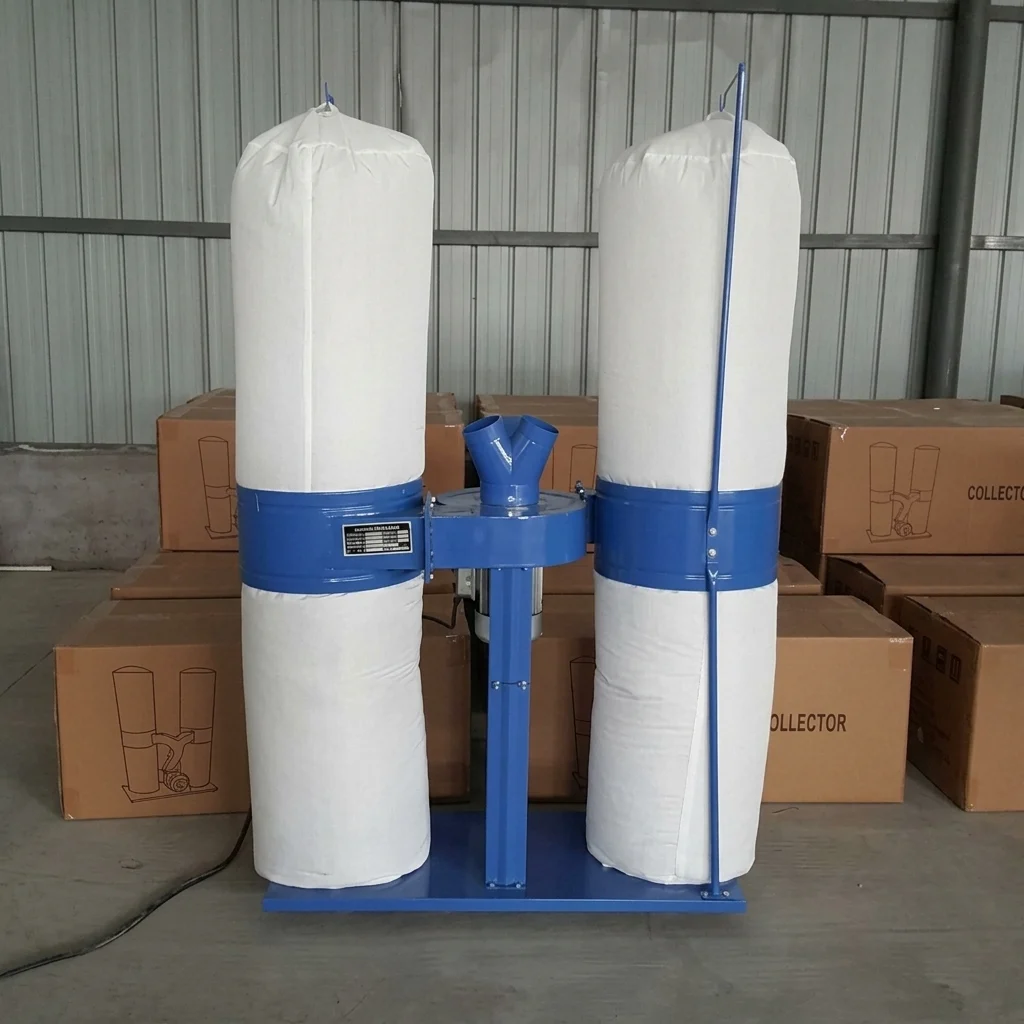
A dust collector cannot be selected reliably from motor power alone. Capture points, required airflow, duct resistance, filter condition and simultaneous machine use all affect system performance. The correct starting point is an inventory of the machines and the real operating pattern.
1. Make a machine and port schedule
For every connected machine, record the dust-port diameter and location, expected dust type and whether the machine runs at the same time as other equipment. Include planned future machines so the duct layout can reserve space without assuming unused capacity is already available.
2. Draw the duct route
Show branch lengths, main-duct lengths, bends, vertical rises, flexible connections and the collector location. Pressure loss depends on the complete route. A layout drawing also reveals maintenance access, discharge handling and whether ducts interfere with doors, cranes or material movement.
3. Describe the dust
Sawing, routing and sanding can produce different particle sizes and loading patterns. State the materials processed, moisture condition and whether dust may be abrasive, sticky or combustible. Local fire, explosion, environmental and occupational requirements must be reviewed by qualified professionals for the installation location.
4. Confirm filter and discharge arrangements
Discuss filter media, cleaning method, pressure monitoring, collection bags or bins, rotary discharge if applicable, waste removal frequency and maintenance clearance. The system must remain serviceable; a filter that cannot be inspected or cleaned easily will not deliver consistent long-term operation.
| Information | Why the designer needs it |
|---|---|
| Port sizes and locations | Defines pickup connections and branch routing |
| Simultaneous-use plan | Determines the operating airflow case |
| Duct lengths and bends | Supports pressure-loss evaluation |
| Dust characteristics | Influences filtration, discharge and safety review |
| Installation location | Affects weather protection, noise, access and local rules |
5. Plan commissioning measurements
Before the system is accepted, agree on the operating condition to be tested and where measurements will be taken. Confirm damper positions, simultaneous machines, filter condition and visible capture at representative sources. Keep the initial record for future troubleshooting and maintenance.
RFQ checklist
- Workshop plan with machine locations
- Machine list and dust-port schedule
- Simultaneous operating combinations
- Duct route and approximate lengths
- Material and dust description
- Waste-discharge preference
- Voltage, frequency and installation environment
- Applicable local safety and environmental requirements
Review the woodworking dust collector selection guide and primary models. A final system should be reviewed for the actual site by qualified engineering and safety professionals.